Situational Awareness
Common Operating Picture (COP)
Real-time GIS mapping synchronizes field SOS alerts, search zones, responder positions, and critical infrastructure into one intuitive multi-layered view.
The unified operations center for incident command, multi-agency response, and field coordination.
Crisis Connect Hub brings live incident triage, FEMA Community Lifelines, volunteer dispatch, shelter capacity tracking, secure crisis video conference rooms, and Sentinel AI guidance into a single, real-time command dashboard for EOCs and field leadership.
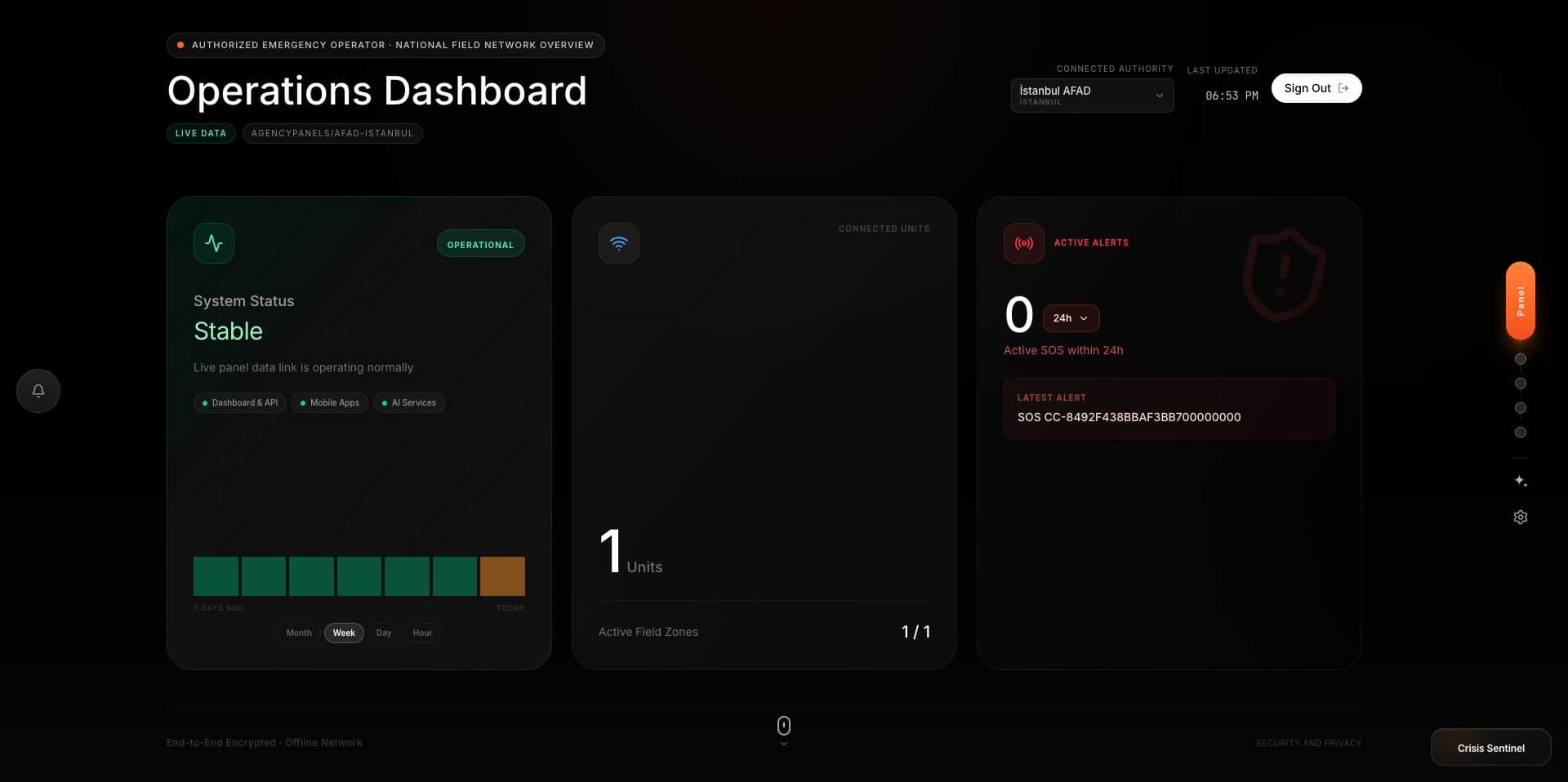
Dashboard.subtitle
7/7
Community Lifelines
Real-time monitoring of essential infrastructure including power, water, comms, and medical.
< 1s
Telemetry Sync
Field updates from Crisis Link mesh networks synchronize automatically to the command desk.
100%
Audit & Governance
Role-based operational access control, shift logs, and strict separation from civilian chat.
Zero Grid
Resilient Continuity
Maintains operational record-keeping and local sync even during severe backhaul outages.
Operations Center Capabilities
Crisis Connect Hub provides disaster response agencies with the clarity, speed, and governance needed to save lives when seconds count.
Situational Awareness
Real-time GIS mapping synchronizes field SOS alerts, search zones, responder positions, and critical infrastructure into one intuitive multi-layered view.
Standardized Triage
Track all seven core community lifelines at a glance to identify cascading failures and direct relief supplies where impact is most severe.
Resource Logistics
Manage critical supplies, heavy equipment, water tankers, and medical provisions with end-to-end allocation tracking and burn-rate warnings.
Human Resources
Match verified responders and volunteers to roles based on qualifications, schedule shifts, and export print-ready official EOC manifests.
Mass Care
Monitor capacity, medical capabilities, special needs accommodations, and supply levels across emergency evacuation shelters in real time.
Command Collaboration
Conduct secure video conferences directly in the dashboard with shared operational briefs, consensus polls, and AI-assisted minutes.
System Architecture
The Hub bridges offline disaster field mesh networks to enterprise command infrastructure without compromising security or civilian privacy.
Field responders and offline mesh devices relay operational telemetry and SOS pings without internet connectivity.
Authorized field bridges and Crisis Link devices synchronize queued telemetry to the Hub backend as soon as connectivity touches a gateway.
The Hub groups overlapping signals, assigns triage priority levels, and surfaces immediate threats to the command desk.
Coordinators assign resources, dispatch search & rescue teams, update lifelines, and maintain shift manifests.
Every command decision, task handoff, and resource allocation is permanently logged with cryptographic verification.
Security & Compliance
Emergency command requires robust security. Crisis Connect Hub adheres to rigorous data protection principles.
The Hub never intercepts or inspects private civilian messages. Civilian mesh chats remain strictly end-to-end encrypted on device.
Distinct permission layers for Super Admins, EOC Incident Commanders, Agency Leads, Dispatchers, and Field Responders.
All triage updates, volunteer registrations, and resource dispatches record timestamps and operator identities for accountability.
Deployable across government cloud infrastructures or local disaster management networks with full offline sync capability.
Frequently Asked Questions
Got questions about deploying the Hub for your municipality, NGO, or emergency agency? Here are the answers.
Crisis Connect Hub is designed for emergency operations centers (EOCs), disaster management agencies, municipal authorities, search and rescue organizations, and certified humanitarian relief NGOs.
Field devices running the Crisis Connect mobile app and Crisis Link relay operational telemetry across local Bluetooth/Wi-Fi mesh networks. When any responder reaches satellite backhaul or a temporary cellular link, queued telemetry flushes instantly into the Hub.
No. Civilian messages are protected by end-to-end encryption and stay on the sender and recipient devices. The Hub receives only authorized operational telemetry, emergency SOS beacons, and volunteer coordination data.
Contact our institutional disaster response team. We provide onboarding, training, agency credential issuance, and technical integration for qualified disaster management entities.
Whether managing local flood response or coordinating national earthquake relief, Crisis Connect Hub brings order, telemetry, and speed to disaster command.